
During the first Sunday of Lent, the Revised Common Lectionary directs Christians to read Genesis 3 and Romans 5. These texts can expose the ways in which we are all complicit in acts of destruction, in the undoing of creation.
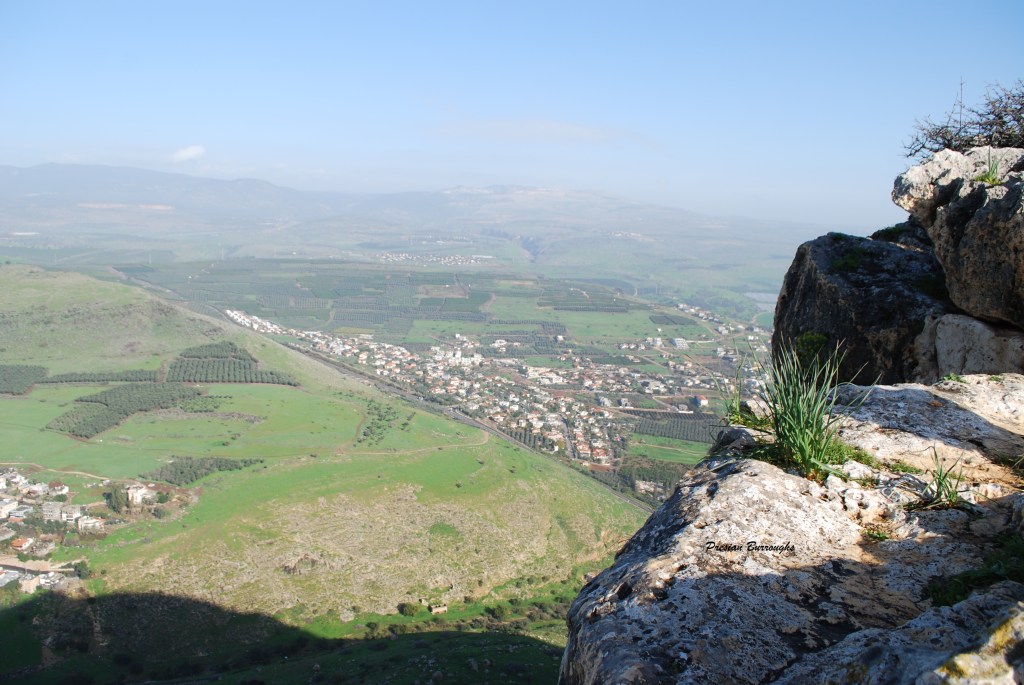
During the first Sunday of Lent, the Revised Common Lectionary directs Christians to read Genesis 3 and Romans 5. These texts can expose the ways in which we are all complicit in acts of destruction, in the undoing of creation.
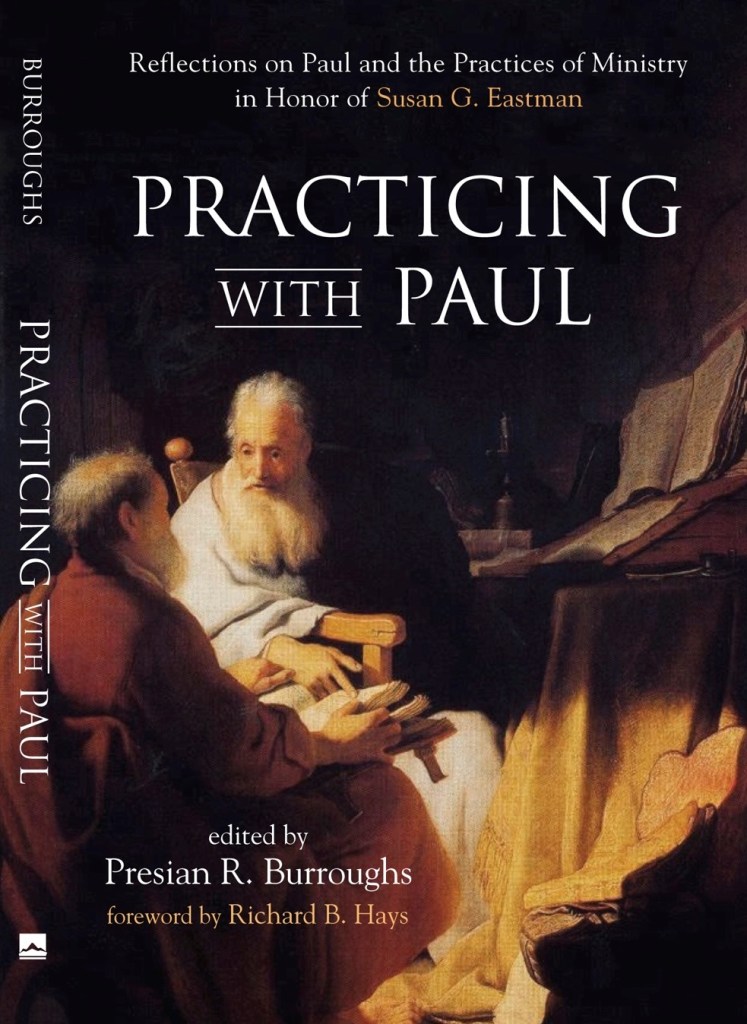
Cascade Books has kindly given me permission to share a PDF of my chapter entitled “Christlike Feasting: Attentiveness, Solidarity, and Self-Restraint.”

The chapter appears in Practicing with Paul: Reflections on Paul and the Practices of Ministry, written in honor of Rev. Dr. Susan Eastman and edited by Presian R. Burroughs.
Learn more about the book and my chapter in the interview at Practicing with Paul – Book Interview.
Enjoy!
Get new content delivered directly to your inbox.
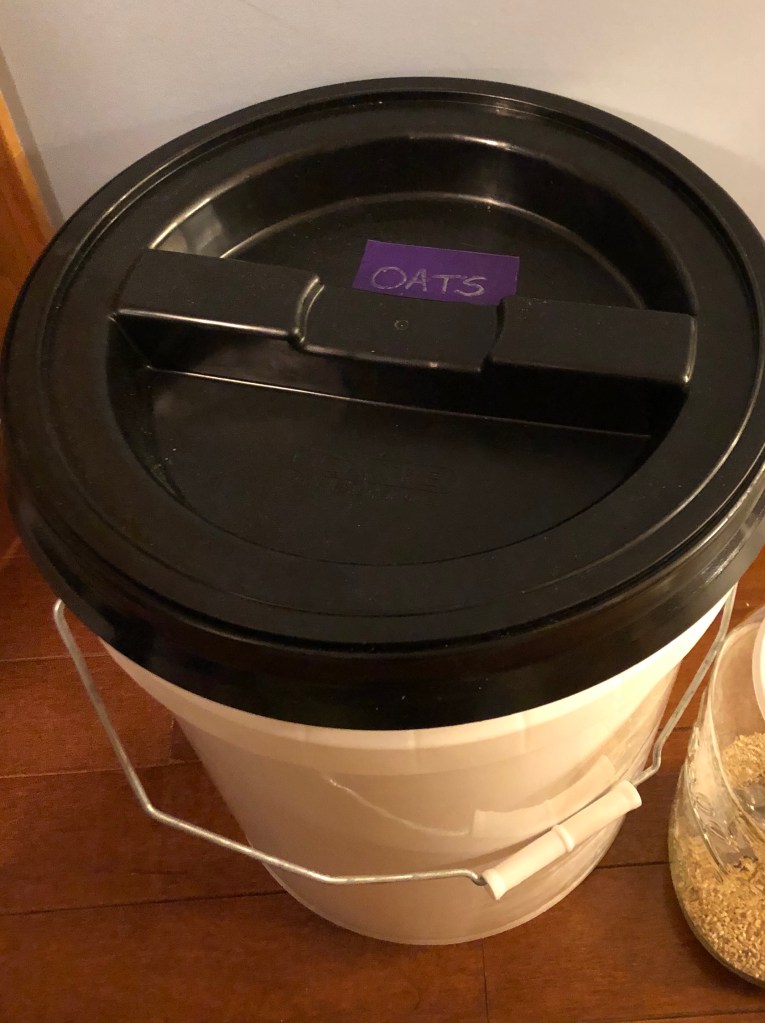
If you’re looking for a healthy, easy, and relatively inexpensive way to feed yourself and others in the mornings, this is a great recipe!
Start with organic steel-cut oats (sometimes called groats). Now, I know this can be expensive if you purchase the small bags of steel-cut oats that major grocery stores sell. Instead of this, try to find a bulk food grocery store in your area (if possible). I’ve been able to find several such stores in Ohio and Pennsylvania, where I’ve lived recently.

If you’re concerned about not being able to eat the oats before they go rancid:
Recipe

Instructions
Before going to bed:

Instructions
Continued . . .

Instructions
In the morning:

Enjoy!

Additional Information:
Get new content delivered directly to your inbox.
A small group of New Testament scholars, theologians, and practical theologians collaborated in honoring Rev. Dr. Susan Eastman with a collection of essays called Practicing With Paul: Reflections on Paul and the Practices of Ministry. I edited the volume and was invited by Cascade Books to discuss the book and my chapter in the video below. The interview gives a snapshot of my interpretation of Romans in relation to agriculture.
Get new content delivered directly to your inbox.
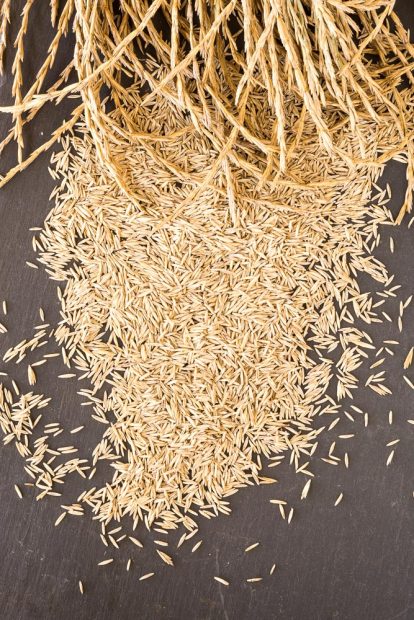

What if farmers didn’t have to plow up the ground every year? And what if they didn’t even have to re-seed their crops every year? Wouldn’t that be amazing and revolutionary?
Grain from the perennial plant, Kernza®. Image of Kernza® perennial grain, developed by plant breeders at The Land Institute. (https://landinstitute.org/our-work/perennial-crops/kernza/). ©️ The Land Institute.
It would indeed. Agriculture would be revolutionized, because humans have depended on annual crops since the birth of agriculture. If farmers didn’t have to sow new seeds each year to grow our primary commodity and staple crops (corn, wheat, soybeans, etc.), the agricultural system would change in significant and positive ways.
Right now our staple crops are annual plants and therefore experience their full life cycle in one growing season. In other words, they fully mature, produce seeds, and then die; those same plants will not grow back the next year. Annual varieties of rice, wheat, oats, corn, soybeans, etc. form the foundation of our diets (in part, because they can be transported and stored without refrigeration for much longer than veggies, fruits, and meats). However, these staple foods require yearly disturbance of the soil for planting. It’s estimated that “annual crops account for roughly 70% of the human population’s food calories and the vast majority of planted croplands worldwide.”[1] (They provide a lot of domesticated animals with their calories too!) Having no other option than to plow and plant our staple crops is a major ecological problem. As we’ve seen in earlier posts on the problems of plowing (parts 1 and 2), our dependence on annual crops—and therefore on plowing and, more recently, on herbicides—results in ecological degradation (and sometimes destruction).
Because of these problems, a growing number of scientists all over the world are trying to develop perennial crops. Perennial plants flower and develop seeds during the summer for several (or many) years in a row. Although their above ground vegetation might die back during winter, their roots remain alive underground and quickly send up new shoots in the spring. The perennial plant then expands during the new growing season and flowers, produces seeds, and goes dormant over the winter.
Perennial plants, such as native prairie grasses, live year after year. They therefore develop strong, deep root systems. Their roots reach much deeper than annual grasses and therefore can access nutrients and water farther underground (see the image to the right comparing annual wheat to perennial wheatgrass). Reaching deeply into the soil is vitally important during droughts. And because these perennial plants have such healthy root systems, they hold precious soils in place when winds blow and waters flow. Additionally, perennial plants do not have to expend precious energy and nutrients to grow whole new root structures each growing season. And because perennials can quickly produce new leaves in the spring, they are more likely than annuals to out-compete any weeds tempted to grow near by.
Recognizing these powerful attributes of perennial plants, plant geneticist Wes Jackson endeavored in the 70s to develop perennial crop varieties. He began The Land Institute in Salina, Kansas to research and develop perennial varieties of wheat, legumes, oilseeds, rice, sorghum, and wheatgrass (which produces grains much like wheat). The Land Institute has made great strides in developing a perennial wheatgrass called Kernza®. Its grains provide “more minerals and more of some vitamins” than traditional wheat flour.[2]
The scientists who have been perfecting Kernza® for wider cultivation have recently given their blessing to its commercialization. A few farmers are growing Kernza®, a few bakers and cooks are incorporating it into their recipes and products, and a few consumers are purchasing Kernza® and its products (where and when available). But all these activities along the food chain need to expand. Our society and earth could benefit from more (1) farmers growing Kernza®, (2) grain millers milling it, (3) bakers and food processors transforming it into edible, nutritious, and affordable foods, (4) and consumers buying and enjoying Kernza® products.
Kernza® is just one of many perennial crops being developed for human consumption so that we can have a true food revolution—one that is good for soils, water, animals, people, and entire ecosystems. Because perennial crops would reduce fuel consumption and greenhouse gas emissions significantly, they’d be great a way to stem the tide of global warming. Because they would hold dirt in place, they’d slow and perhaps even reverse the loss of topsoil. Because they have deep root systems, they’d require less water and decrease agriculture’s use of freshwater for irrigation. Perennial food crops provide an excellent approach to feeding people in ecologically-healthy ways for generations! I’ll discuss Kernza® more in future posts, so stay tuned!
Image from https://landinstitute.org/our-work/perennial-crops/. The picture compares annual wheat plants and perennial wheatgrass plants. © The Land Institute

If you’d like to be a part of supporting this agricultural revolution, please contact me at scripturecreationandlife@gmail.com.
Get new content delivered directly to your inbox.
[1] https://landinstitute.org/our-work/perennial-crops/
[2] Lee DeHaan, Email, 4-8 April 2014 2014.

Plowing causes serious problems in our ecosystems. Erosion (loss of soil itself) and soil degradation (loss of nutrients and soil compaction) are two significant problems that affect localized fields and areas downstream. But plowing also releases large amounts of greenhouse gases into the atmosphere; this is a global challenge. Now more than ever before, people recognize these disadvantages. Yet farmers continue to plow (as we humans have done for millennia). That’s because plowing does some important work in the agricultural process.

Plowing provides two primary advantages to farmers. 1) It upends plants (often called weeds) that would otherwise interfere with the growth of the new crop. 2) Plowing also opens the moist, nutrient rich soil where seeds can germinate.
Image from https://iowaagliteracy.wordpress.com/2015/04/27/why-do-they-do-that-plowing-or-tilling-fields/.
If farmers want to avoid or alleviate the negative drawbacks to plowing, they must figure out how to simulate its benefits. Farmers need ways to decrease the presence of unwanted plants that compete for nutrients, water, and light, and they need new technologies that help them place the desired seeds or seedlings into the nourishing soil without plowing. These tactical questions have captured the attention of many agronomists and farmers in recent decades.
The advent of agricultural chemicals (such as herbicides) has enabled scientists to develop one set of solutions. With the help of chemicals (such as glyphosate, the primary active ingredient in Roundup®) that kill vulnerable plants, farmers can now spray fields to kill unwanted plants and thereby avoid plowing. The weeds and other unwanted plants in the field die, making way for a new generation of seeds and seedlings to grow. This method of farming is called no-till conventional agriculture or is sometimes named conservation agriculture (because it focuses on conserving the soil).
With the weed problem out of the way, how do farmers open the ground so that new seeds can germinate in the moist soil? In the words of geologist David Montgomery, “No-till farmers . . . use specialized planters that open a narrow slot in the soil about the width of a kernel of corn. Seeds drop down into the slot, disturbing much less of the surrounding soil than plowing it up would.”[1] Along with this seed drill, innovative people have created equipment that “injects a uniform amount of fertilizer adjacent to and below each just-planted seed, putting nutrients right where plants need them—and only there. This uses far less fertilizer than spraying it all over the field. The farmer saves money and fewer chemicals run off to pollute streams, lakes, and oceans. That sounds like a win-win, except of course to fertilizer companies.”[2] This approach to agriculture greatly improves soil structure, reduces soil erosion and the release of greenhouse gases, retains moisture in the soil, and even reduces fertilizer run-off.
Of course, the big drawback to conventional no-till agriculture is its use of herbicides. I’ll present recent scientific findings on the effects of glyphosate on soil microbes and macrobes, insects, amphibians, birds, and mammals in future posts.
A less deadly no-till method of farming exist. Let’s consider it.
Image from http://clipart-library.com/pictures-of-poison.html.

No-till organic agriculture would appear to some to be doomed for failure since no synthetic agro-chemicals (such as herbicides) are used to kill and control weeds. But innovative farmers have developed new solutions for controlling weeds. In the fall, they plant a cover crop, such as rye or vetch, to out-compete weeds and to add nutrients and organic matter to the soil.

In the spring, farmers use a special roller-crimper that breaks the stems of the cover crop, killing the plants and laying them flat on the ground.[3] Farmers then use a seed drill to plant crop seeds into the soil underneath the layer of plant mulch (left-over from the cover crop; see image) that helps the soil absorb and maintain moisture and discourages the growth of weeds.[4] The organic no-till approach requires farmers to time their rolling-crimping perfectly so that the cover crop plants actually die but also before these plants produce viable seeds (that could then grow as competitors to the crop plants).
Image from https://www.ecofarmingdaily.com/build-soil/tillage/book-week-organic-no-till-farming/.
Both conventional and organic no-till systems enable farmers to implement three “best practices” that support long-term soil health and nutritious food. These practices include “minimum disturbance of the soil;” “growing cover crops and retaining crop residue so that the soil is always covered;” and “use of diverse crop rotations.”[5]
While I applaud the soil-conserving-achievements of conventional no-till farming, I believe scientists have collected enough data on the negative effects of glyphosate and other herbicide ingredients to give us pause. Farmers, consumers, politicians, and even agri-business employees should take a good, hard look at the data and reconsider whether conventional no-till methods—with its dependence on deadly chemicals—should be maintained. We’ll consider the evidence against glyphosate soon!
Get new content delivered directly to your inbox.
[1] David R. Montgomery, Growing a Revolution: Bringing Our Soil Back to Life (New York: W. W. Norton & Company, 2017), 22.
[2] Ibid.
[3] The Rodale Institute developed the roller-crimper. https://rodaleinstitute.org/why-organic/organic-farming-practices/organic-no-till/
[4] https://www.no-tillfarmer.com/articles/6497-cover-crops-can-make-organic-no-till-work
[5] Montgomery, 68.