Four reasons why I read Romans and the Pauline Epistles in their first-century political context


Website of Dr. Presian Renee Burroughs
Four reasons why I read Romans and the Pauline Epistles in their first-century political context
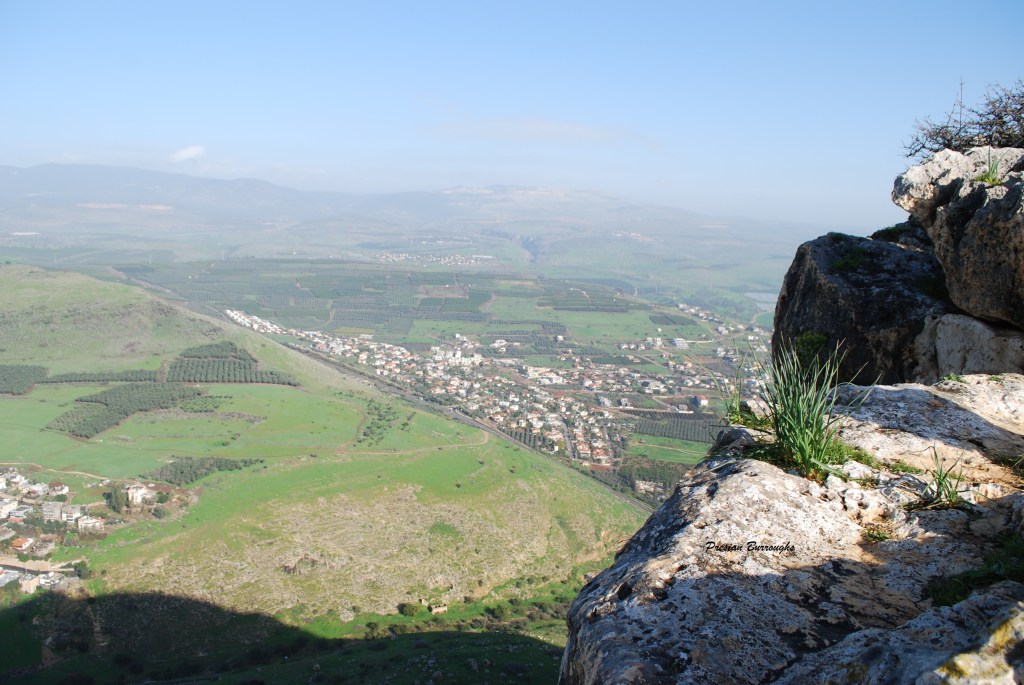
During the first Sunday of Lent, the Revised Common Lectionary directs Christians to read Genesis 3 and Romans 5. These texts can expose the ways in which we are all complicit in acts of destruction, in the undoing of creation.
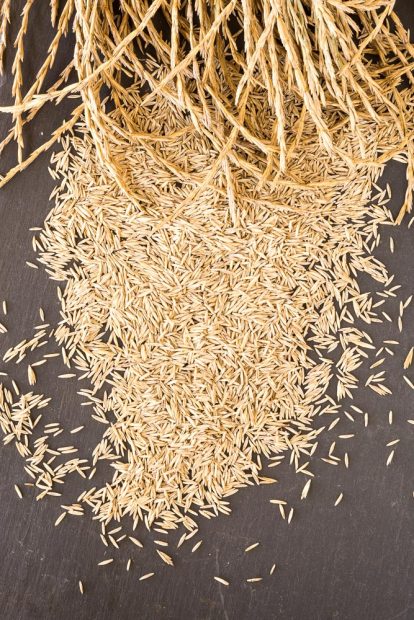

What if farmers didn’t have to plow up the ground every year? And what if they didn’t even have to re-seed their crops every year? Wouldn’t that be amazing and revolutionary?
Grain from the perennial plant, Kernza®. Image of Kernza® perennial grain, developed by plant breeders at The Land Institute. (https://landinstitute.org/our-work/perennial-crops/kernza/). ©️ The Land Institute.
It would indeed. Agriculture would be revolutionized, because humans have depended on annual crops since the birth of agriculture. If farmers didn’t have to sow new seeds each year to grow our primary commodity and staple crops (corn, wheat, soybeans, etc.), the agricultural system would change in significant and positive ways.
Right now our staple crops are annual plants and therefore experience their full life cycle in one growing season. In other words, they fully mature, produce seeds, and then die; those same plants will not grow back the next year. Annual varieties of rice, wheat, oats, corn, soybeans, etc. form the foundation of our diets (in part, because they can be transported and stored without refrigeration for much longer than veggies, fruits, and meats). However, these staple foods require yearly disturbance of the soil for planting. It’s estimated that “annual crops account for roughly 70% of the human population’s food calories and the vast majority of planted croplands worldwide.”[1] (They provide a lot of domesticated animals with their calories too!) Having no other option than to plow and plant our staple crops is a major ecological problem. As we’ve seen in earlier posts on the problems of plowing (parts 1 and 2), our dependence on annual crops—and therefore on plowing and, more recently, on herbicides—results in ecological degradation (and sometimes destruction).
Because of these problems, a growing number of scientists all over the world are trying to develop perennial crops. Perennial plants flower and develop seeds during the summer for several (or many) years in a row. Although their above ground vegetation might die back during winter, their roots remain alive underground and quickly send up new shoots in the spring. The perennial plant then expands during the new growing season and flowers, produces seeds, and goes dormant over the winter.
Perennial plants, such as native prairie grasses, live year after year. They therefore develop strong, deep root systems. Their roots reach much deeper than annual grasses and therefore can access nutrients and water farther underground (see the image to the right comparing annual wheat to perennial wheatgrass). Reaching deeply into the soil is vitally important during droughts. And because these perennial plants have such healthy root systems, they hold precious soils in place when winds blow and waters flow. Additionally, perennial plants do not have to expend precious energy and nutrients to grow whole new root structures each growing season. And because perennials can quickly produce new leaves in the spring, they are more likely than annuals to out-compete any weeds tempted to grow near by.
Recognizing these powerful attributes of perennial plants, plant geneticist Wes Jackson endeavored in the 70s to develop perennial crop varieties. He began The Land Institute in Salina, Kansas to research and develop perennial varieties of wheat, legumes, oilseeds, rice, sorghum, and wheatgrass (which produces grains much like wheat). The Land Institute has made great strides in developing a perennial wheatgrass called Kernza®. Its grains provide “more minerals and more of some vitamins” than traditional wheat flour.[2]
The scientists who have been perfecting Kernza® for wider cultivation have recently given their blessing to its commercialization. A few farmers are growing Kernza®, a few bakers and cooks are incorporating it into their recipes and products, and a few consumers are purchasing Kernza® and its products (where and when available). But all these activities along the food chain need to expand. Our society and earth could benefit from more (1) farmers growing Kernza®, (2) grain millers milling it, (3) bakers and food processors transforming it into edible, nutritious, and affordable foods, (4) and consumers buying and enjoying Kernza® products.
Kernza® is just one of many perennial crops being developed for human consumption so that we can have a true food revolution—one that is good for soils, water, animals, people, and entire ecosystems. Because perennial crops would reduce fuel consumption and greenhouse gas emissions significantly, they’d be great a way to stem the tide of global warming. Because they would hold dirt in place, they’d slow and perhaps even reverse the loss of topsoil. Because they have deep root systems, they’d require less water and decrease agriculture’s use of freshwater for irrigation. Perennial food crops provide an excellent approach to feeding people in ecologically-healthy ways for generations! I’ll discuss Kernza® more in future posts, so stay tuned!
Image from https://landinstitute.org/our-work/perennial-crops/. The picture compares annual wheat plants and perennial wheatgrass plants. © The Land Institute

If you’d like to be a part of supporting this agricultural revolution, please contact me at scripturecreationandlife@gmail.com.
Get new content delivered directly to your inbox.
[1] https://landinstitute.org/our-work/perennial-crops/
[2] Lee DeHaan, Email, 4-8 April 2014 2014.

“The Lord God took the man and put him in the garden of Eden to till it and keep it” (Gen 2:15, NRSV; emphasis added).

God put Adam in the garden to till it. And to till soil, means to plow it up. Right?
The Smithsonian Magazine article entitled, “Did John Deere’s Best Invention Spark a Revolution or an Environmental Disaster?” by Jackson Landers includes this image with the description: “Tradition holds that this plow, held in the Smithsonian collections, is one of the first three plows that John Deere personally forged. (National Museum of American History)” (https://www.smithsonianmag.com/smithsonian-institution/did-john-deeres-best-invention-spark-revolution-or-environmental-disaster-180957080/).
When we read Genesis 2:15 in the NRSV translation, we come away with a clear idea of what God intended Adam to do in the garden: to till the soil. However, when we read other modern English versions we get a more general sense of what God expected of Adam: to work (Gen 2:15, NIV), cultivate (NAB, NASB), or farm the garden (CEB).
Most of us probably assume that Genesis 2:15 justifies—if not commissions—the human work of plowing up the soil. But what if “till” over-interprets the underlying Hebrew verb? What if plowing up the ground isn’t necessarily what God placed Adam in the garden to do? Would we be willing to reconsider our approaches to agriculture—both in light of scripture and in light of science?
I’m hoping your answer is yes. But even if not, take a little linguistic journey with me.
The verbs “till,” “cultivate,” and “farm” have pretty narrow ranges of meaning in English. These verbs call to mind the work involved in farming. Tilling here is the most specific, with its connotation of plowing and opening up the ground. Farming and cultivating, in contrast, can describe many different actions involved in growing food, with or without tilling or plowing. Think of the nut or fruit-tree farmer. She does not plow up the ground every spring to plant; she’d hurt her trees’ roots.
This variety of English translations should make us wonder what the underlying Hebrew term meant. What was its range of meaning? Was it a specialized term, referring to the tasks of farming specifically? Or, was it a general term?
The Hebrew verb that the NRSV translates as “till” is ʿābad. It has a very general meaning of “work,” “serve,” “labour,” “work for another,” and even “worship.”[1]
The verb ʿābad takes on specific agricultural nuances when it is placed in a context describing farm work. For example, the agricultural context of Isaiah 30:23-24 and especially the participation of oxen and donkeys make it pretty clear that the verb ʿābad in verse 24 means “till” or “plow.” The passage states:
“[God] will give rain for the seed with which you sow the ground, and grain, the produce of the ground, which will be rich and plenteous. On that day your cattle will graze in broad pastures; and the oxen and donkeys that till the ground will eat silage, which has been winnowed with shovel and fork” (Isaiah 30:23-24).
As we read this passage, we can imagine a pair of oxen slowly pulling an ancient plow through the soil. The translation “till” accurately portrays the meaning of this Hebrew text.
Phote from: mbH, Zenodot V. “Plowing Egyptian Farmer.” Ancient History Encyclopedia. Last modified April 26, 2012. https://www.ancient.eu/image/112/.

But our passage in Genesis 2 doesn’t mention the work of oxen or the use of farming implements. This doesn’t mean that the verb in Genesis 2:15 can’t mean till. But the verb in this context does not demand such a narrow meaning.
Two details in Genesis 2 suggest that Adam’s work is meant to promote the land’s ability to grow plants for the long-term. The first detail comes at the beginning of this second creation account. “In the day that the Lord God made the earth and the heavens . . . no plant of the field was yet in the earth and no herb of the field had yet sprung up” (Gen 2:4-5a). Why not? Why are there no plants yet? Verse 5 goes on to explain, “for the Lord God had not caused it to rain upon the earth, and there was no one [ādām] to till [laʿăbod] the ground.”[2] God had not yet sent the necessary, nourishing waters upon the soil, and God had not yet created the human to work and serve the ground.
This story of creation establishes a positive link between human agricultural labor and the spread of plants and herbs of the field. Human activity is expected to promote the land’s ability to grow plants.[3]
But should this growth only last for a short time? Should societies degrade soils, abandon fields, and move on to new lands, as has happened so often in human history in large part because of plowing?[4] Are we humans bound to use up the fertility of a particular place and then destined to exploit other lands?
The obvious answer is no. At least this is not God’s intention. Whether or not we can learn to live within an ecosystem’s constraints and maintain its fertility is another question. But what we find in the second creation account is a vision of the human being not only serving or working the land but also keeping it.
Just after Genesis 2:15 indicates that the human is to ʿābad the garden, it says adam must also šāmar it. This Hebrew verb means “keep, watch, preserve.”[5] Sometimes this verb occurs in connection with God’s Law, commands, and covenant, indicating God’s people are to maintain their side of the covenantal relationship with care, perseverance, and integrity. One famous passage that delineates Israel’s obligation to keep the covenant is Deuteronomy 29. At Deuteronomy 29:9 Moses declares: “Therefore diligently observe [keep / šāmar] the words of this covenant, in order that you may succeed in everything that you do.”[6] Keeping the covenant isn’t a task that ends after a few years or decades. It goes on for the entirety of one’s life and extends throughout the generations, for all those who receive its gifts and accept its restraints.
All of this is to say that Adam’s task of “keeping” the garden is not another way to say that he is to hoard it. “Keep” might give us this impression in English, but that is far from the underlying Hebrew word’s meaning. God expects Adam to preserve, conserve, protect, watch over, and maintain the wellbeing of the garden for the long haul. (Genesis 1:29-30 provides a similar depiction of humans caring for the long-term health of the land. See my “A Call to Share Plants & Soil.”)
When our methods of tilling the land and growing food actually work at cross-purposes with our commission to serve the land and maintain it, then we must stop what we’re doing, turn from our destructive practices, and learn healthier forms of agriculture that will protect and even build the fertility of the soil. In another post, I’ve traced how tilling soil year after year negatively affects global health by releasing large amounts of greenhouse gases (Problems of Plowing, Part 1: Greenhouse Gases). I’ve also described the ways in which tilling leads to the loss (rather than protection) of our fertile soils in Problems of Plowing, Part 2: Erosion. From a scientific perspective, plowing isn’t the best way to care for our soils. And from a scriptural perspective, tilling isn’t an essential feature of being human or of fulfilling God’s commission to Adam.
But you’re probably wondering, “Isn’t plowing vital to global human survival? Isn’t plowing necessary from a practical perspective?” With food choices and human population numbers what they are today, yes; plowing is essential. But farming methods and crop possibilities are changing. We’ll review some of these possibilities in future posts.
In the meantime, consider how you might support farmers who commit themselves to serving and maintaining their land. One way to connect with such farmers is by searching the directory of the Certified Naturally Grown network (https://www.cngfarming.org/). This network of farmers are committed to “implement[ing] tillage and cultivation practices that maintain or improve the physical, chemical, and biological condition of soil and minimize soil erosion” and “managing crop nutrients and soil fertility through rotations, cover crops, and the application of plant and animal materials” (among other ecologically-healthy commitments).[7]
Get new content delivered directly to your inbox.
[1] Francis Driver S. R. Brown et al., The Brown-Driver-Briggs Hebrew and English Lexicon : With an Appendix Containing the Biblical Aramaic : Coded with the Numbering System from Strong’s Exhaustive Concordance of the Bible / Uniform Title: Hebrew and English Lexicon of the Old Testament, [New ]. ed. (Peabody, Mass.: Hendrickson Publishers, 1996), 712-13.
[2] The verb “till” renders the Hebrew verb ʿābad.
[3] For intriguing studies about the ways in which human agricultural activity can indeed promote healthy growth of plants for the long term, read Braiding Sweetgrass by Robin Wall Kimmerer (https://milkweed.org/book/braiding-sweetgrass; https://www.facebook.com/braidingsweetgrass/).
[4] For a helpful exposition of this phenomenon and its relationship to the decline of civilizations, see David R. Montgomery, Dirt: The Erosion of Civilizations (Berkeley: University of California Press, 2008).
[5] Brown et al., 1036.
[6] This verse appears as Deuteronomy 29:8 in the MT and LXX versions.
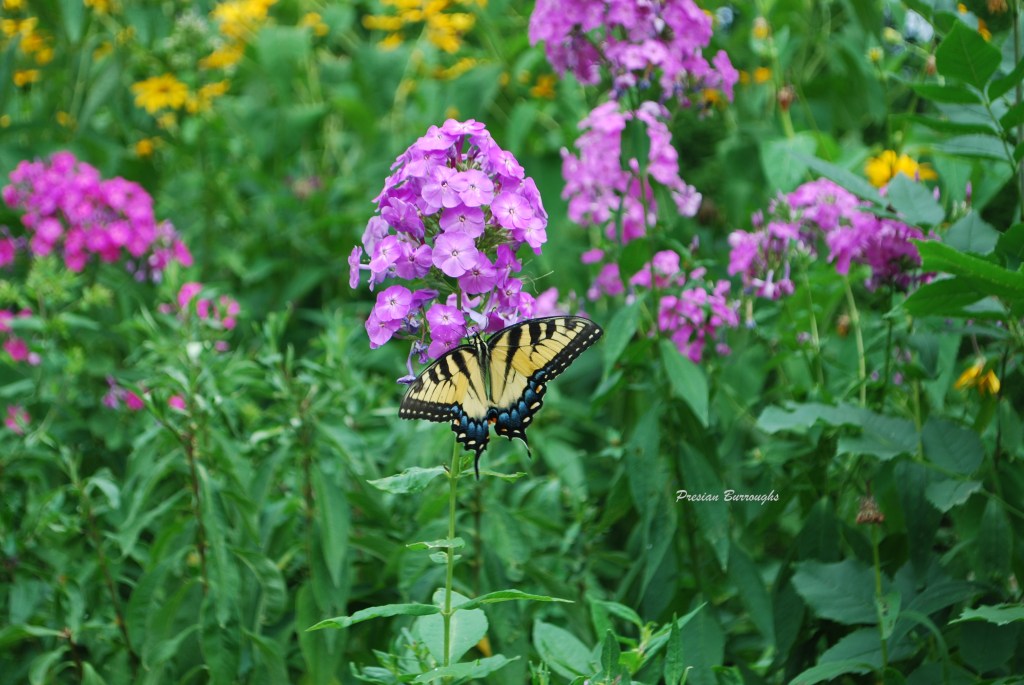
Genesis 1 presents us with a portrait of creation buzzing with life.

There’s a diversity of plants, all with the ability to reproduce themselves and sustain the lives of others. Aquatic, avian, and terrestrial animals fill the waters, skies, and lands, finding plentiful nourishment from plants. And human beings carry the blessing and image of God as they too enjoy the earth’s rich botanical bounty.
At this point in the creation story, God has not yet given humans permission to kill animals and eat their flesh. That permission won’t come until after the flood and the establishment of God’s covenant with the earth in Gen 9:3, 13. But there’s more than enough food to go around, and the land and plants have the creative capacity to continue sprouting plants and bearing seed.
Simply recognizing the foundational role plants and soils play in human and animal welfare, according to Genesis 1, should be enough to inspire people to devote significant efforts to cultivating gardens, establishing green spaces, preserving vast stretches of forests, and sustaining seed stocks. Yet, we know that’s not the case when, “between 1990 and 2016,” human societies cut down “502,000 square miles (1.3 million square kilometers) of forest.”[1]
But beyond the general notion that plants are foundational, Genesis 1 gives us an even more explicit reason to pay attention to how we treat plants and soils. In verses 29-30, God explains to the humans,
“See, I have given you every plant yielding seed that is upon the face of all the earth, and every tree with seed in its fruit; you shall have them for food. And to every beast of the earth, and to every bird of the air, and to everything that creeps on the earth, everything that has the breath of life, I have given every green plant for food.” And it was so (Gen 1:29-30).

We discover from these verses that God expects humans to share the earth’s provision of plants not only with each other but with all animals. For, after God blesses the human male and female and orders them to have “mastery among”[2] the other creatures, God designates their food source as plants with seed and fruit from trees. Then, demonstrating not only care for humans but also all animate life, God gives “every green plant” as food to all creatures that have the breath of life. It’s as if animals have been given a divine grant to green plants and to the healthy soils that produce them.
However, because we humans tear up so many plants and pave over so much fertile soil, we put significant amounts of pressure on animal food sources (not to mention the sources of food for indigenous people). By disrupting and removing native forests, replacing fruit and seed-bearing native plants with manicured lawns, and spraying large expanses of land with herbicides (as in most forms of agriculture today),[3] we remove the plants on which God’s creeping, crawling, prowling, flying creatures depend.
Now, of course, we humans have to eat too. But I’m willing to bet that many of us could reduce and change our consumption patterns so that fewer rainforests, for example, are cut down (often to make way for beef cattle, soybeans, or palm plants). We could prod ourselves, our relatives, our friends, and our colleagues to consider the common good—of humanity and the rest of God’s creation—when we purchase something and otherwise make decisions about how we use land. Genesis 1 teaches it’s not just about us and the gratification of our own desires. God expects us to share this beautiful and bountiful planet with all. How might you support the ecological common good in 2020? I’d love to hear your thoughts!
For information about rainforest protection and sustainable agriculture, see:
For interesting discussions of how some human societies have positively supported biodiversity and ecosystem stability, see:
What organizations and resources do you recommend? Leave suggestions in the comment box and don’t forget to subscribe!
Get new content delivered directly to your inbox.
[1] Christina Nunez, “Climate 101: Deforestation,” National Geographic (February 7 2019), https://www.nationalgeographic.com/environment/global-warming/deforestation/.
[2] Ellen Davis suggests this translation rather than “dominion over” [Ellen F. Davis, Scripture, Culture, and Agriculture : An Agrarian Reading of the Bible (New York: Cambridge University Press, 2009), 55.].
[3] I’ll discuss the negative ecosystem effects of herbicides in detail in a future “Creation” post.

On Christmas morning, the calcium carbonate bones of the earth cradled Jesus’ newborn body.

When we read Genesis 1, most of us probably focus on the way God creates the world and everything in it by divine word. For example, we overhear God saying:

The verb forms here are third person jussives, which are “used to express the speaker’s desire, wish, or command.”[2] In each instance, the jussive of “to be” ushers in the existence of certain created things. “Let there be . . .” begins a creative event.
In one instance of “let there be,” we receive a follow-up report explaining God made the intended objects:
God’s creative word here is attended by God’s creative action.
These verses catch our attention and rightly enable us to recognize God’s benevolent, effectual, and purposeful creative powers. However, if we were to concentrate on these verses alone, we’d miss key elements in this fundamental passage on creation.
When we look a little more carefully at the wording on days three, five, and six, we discover that God does not work alone. The writer of Genesis 1 again uses jussives but directs these jussives to the water and land. We hear God exclaim:

“Let the earth put forth vegetation: plants yielding seed, and fruit trees of every kind on earth that bear fruit with the seed in it” (1:11)
“Let the waters bring forth swarms of living creatures, and let birds fly above the earth across the dome of the sky” (1:20)


“Let the earth bring forth living creatures of every kind: cattle and creeping things and wild animals of the earth of every kind” (1:24)
In these verses, the jussives function as invitational commands. We find a similar use of a jussive in 2 Sam 14:11 when the woman of Tekoa requests help from King David. She uses a jussive as a polite command or invitation, saying “Pray let the king remember the LORD your God.”
In Genesis 1:12, we’re told the earth responds to the first invitation and “brought forth vegetation.”
Then, with respect to animate life forms, two of the invitations are followed up with an announcement that God too created the intended living things:
When considered in this way, we find that Genesis 1:11-12, 20-21, and 24-25 portray God as inviting the water and earth to collaborate in the creation of living things, living things that are endowed with the capacity to thrive and propagate. The creation poem of Genesis 1 certainly depicts God as the powerful Creator. But it also reveals to us that this God does not always work unilaterally.
God invites the “inanimate” creation itself to bring forth life as well as all the plants that will sustain life.
If you’re still not convinced, consider how the writer of Genesis 1 might have narrated this first creation account. Instead of “let the earth bring forth vegetation,” the author could have depicted God saying, “Let there be plants.” In place of “let the waters bring forth swarms of living creatures,” we might read, “let there be living creatures in the water.” Rather than “let the earth bring forth living creatures,” the omnipotent God might have said, “let there be living creatures.”
But that’s not what this scripture passage says.
So, what do you make of the text as it stands?
If the land is such a central participant in God’s creation of aquatic and terrestrial animals on days five and six, according to Genesis 1, what role might it have in the creation of humankind at the end of day six? To find out more, stay tuned for: “Let us make”: An address to the land in Genesis 1:26. For a more detailed exposition of Genesis 1, you can also keep your eyes open for my “In the Image of Heaven and Earth: ‘Let Us Make’ and the Agency of Earth in Genesis 1:26.”
Get new content delivered directly to your inbox.
[1] Unless indicated otherwise, I quote the NRSV.
[2] Page H. Kelley, Biblical Hebrew : An Introductory Grammar (Grand Rapids, Mich.: W.B. Eerdmans, 1992), 131.
What’s inspired me to think about Genesis 1 this way: Terence E. Fretheim, God and World in the Old Testament: A Relational Theology of Creation (Nashville: Abingdon, 2005). Ellen F. Davis, Scripture, Culture, and Agriculture : An Agrarian Reading of the Bible (New York: Cambridge University Press, 2009).
© Presian Renee Burroughs and Scripture, Creation, and Life, 2019-2020. Unauthorized use and/or duplication of this material without express and written permission from this site’s author and/or owner is strictly prohibited. Excerpts and links may be used, provided that full and clear credit is given to Presian Renee Burroughs and Scripture, Creation, and Life with appropriate and specific direction to the original content.